NICU Nursing Explained: Career Path, Skills, and Real-Life Advice
Updated: Jul 21
Hello! Welcome to my little space on the internet where I share all things NICU nursing and NICU life. If you’ve found your way here, chances are you’re curious about what it’s really like to be a NICU nurse.

Over the years, I’ve been asked so many questions about this specialty. Below are some of the most common ones, along with advice and insight from my past decade of experience working in the NICU.
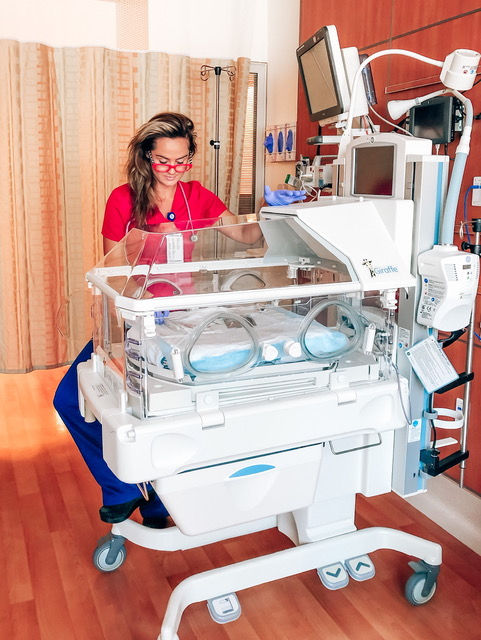
Hi, I’m Nurse Tori! (Victoria Meskin, MSN, RNC-NIC). I’ve been a neonatal intensive care unit (NICU) nurse since 2012, caring for some of the smallest and most fragile patients: newborns who need extra support to grow and thrive. I have worked in Children's Hospitals, University Hospitals, small and large NICUs, where I take care of premature and critically ill infants and support their families during some of the most emotional moments of their lives.
I also earned my Master’s degree in Nursing Leadership, and I’m passionate about not only caring for my patients but also educating and mentoring others. I’m also the co-founder of NICUity, a company focused on creating better education and resources for NICU providers and families.
NICU Nurse Q/A
1. What education or training did you have to get in order to do this work?
To work as a NICU Nurse, you must obtain your nursing license. In order to sit for the Nursing Boards, you have to complete a nursing program. There are 3 main degrees: ADN (Associate's Degree in Nursing), BSN (Bachelor's of Science Nursing), and MSN (Master's Degree in Nursing). You can work in any NICU with these degrees. However, I typically recommend obtaining your BSN if possible as many new grad NICU programs require this or hiring managers tend to favor the bachelor's degree as potential candidates.
ADN (Associate Degree in Nursing)
⏱ Time: ~2 years🎯 Level: Entry-level nurse (RN)
An ADN is the fastest way to become a registered nurse. You’ll learn the core skills needed to safely care for patients and can start working in hospitals, clinics, or long-term care settings after passing the NCLEX (nursing license exam).
How to get it:
Apply to a community college nursing program
Complete prerequisite classes (like biology, anatomy)
Finish the nursing program (~2 years)
Pass the NCLEX-RN → become a licensed RN
Good to know: Great starting point, but some hospitals prefer or require a BSN.
BSN (Bachelor of Science in Nursing)
⏱ Time: ~4 years (or 2 years if you already have an ADN)🎯 Level: RN + more advanced training
A BSN includes everything in an ADN program plus deeper education in leadership, critical thinking, research, and public health. Many hospitals (especially NICUs, ICUs, and larger medical centers) prefer BSN-prepared nurses.
How to get it:
Attend a 4-year university nursing program OR
Get your ADN first → then complete an RN-to-BSN program (often online)
Pass the NCLEX-RN
Why it matters: More job opportunities, higher earning potential, and better preparation for specialty units (like NICU 👶)
MSN (Master of Science in Nursing)
⏱ Time: ~2–3 years after BSN🎯
Level: Advanced practice or leadership
An MSN takes your nursing career to the next level. This is where you can specialize, like becoming a nurse practitioner, educator, or leader.
Why it matters: Some colleges and universities offer direct-entry MSN programs for students who already have a bachelor’s degree in another field. This means you can bypass earning a separate BSN and go straight into a master’s program, allowing you to become a registered nurse and earn your MSN in one streamlined path.
2. Can you outline some of the things you do during an average day as a NICU nurse?
General list of NICU Nurse Duties
♡ Full head-to-toe assessments & direct patient care
♡ Monitor vitals, labs, and overall stability
♡ Assist with imaging (CXR, ECHO, MRI, etc.)
♡ Support line placements (PICC, UAC, UVC, central lines)
♡ Assist with procedures (intubations, extubations, bronchoscopies)
♡ Start IVs & obtain labs (central lines, PICC, heel sticks)
♡ Maintain and manage central lines (sterile changes, caps, tubing)
♡ Place feeding tubes (NG/OG)
♡ Prepare infants for surgery
♡ Provide post-operative and surgical site care (trachs, ostomies, chest tubes, etc.)
♡ Administer medications (IV, oral, IM, rectal, buccal, etc.)
♡ Collaborate with respiratory, providers, therapy, and ancillary teams
♡ Communicate changes in patient status
♡ Feed, bathe, and comfort babies
♡ Support breastfeeding and pumping
♡ Advocate for each infant’s needs
♡ Provide patient- and family-centered care
♡ Educate and support parents and caregivers
♡ Coordinate resources for families
♡ Participate in research and evidence-based practice
♡ Precept and mentor new nurses
♡ Contribute to unit and hospital improvement initiatives
3.What kinds of diagnoses do you see in the NICU?
There are many reasons why a baby would end up in a NICU. The reason could be as simple as dehydration from breastfeeding difficulties, or it could be as complex as a life-threatening diagnosis or congenital disease. The type and complexity of the diagnoses you may see depend on the level of NICU you work at. Acuity levels range from I-IV, with level IV facilities providing the most comprehensive and complex care.

Diagnosis Includes:
Prematurity (babies born before 37 weeks of pregnancy)
Early term infants (babies born between 37-39 weeks of pregnancy)
Low birth weight (babies that weigh less than 5.5 pounds)
Micro-preemies,
Sepsis (serious infections)
Respiratory Distress Syndrome (RDS)
Heart Defects
Congenital anomalies
Respiratory failure
Birth defects
Trauma
Seizures
Gastroschisis
Hypoglycemia
Intrauterine Growth Restriction (IUGR)
Intraventricular Hemorrhage (IVH)
Jaundice
Necrotizing Enterocolitis (NEC)
Multiples (Twins, Triplets)
Neonatal Abstinence Syndrome (NAS, drug addicted mothers)
Unknown pregnancies
Precipitous birth
Placental Abruption, etc.
4. What is the work schedule like?
Most NICU and hospital nursing jobs are built around 12-hour shifts. That usually means either 7:00 AM–7:00 PM or 7:00 PM–7:00 AM. Full-time nurses typically work three shifts a week (36 hours), which gives you four days off.
Some hospitals still offer 8-hour shifts, but that’s becoming less common. Most units have moved to 12s because it simplifies scheduling and reduces the number of times care gets handed off between nurses.
Working longer shifts also means you spend more consistent time with your patients, which many nurses (myself included) really value. But it’s not perfect,12-hour shifts can be physically and mentally exhausting, especially in high-acuity areas like the NICU.
At the end of the day, both schedules have pros and cons. It really comes down to your lifestyle, your unit, and what works best for you.
5. What are some of the most important skills you had to learn to do this job well?
Being a NICU nurse is a mix of science, heart, and adaptability. These are some of the biggest skills I’ve learned along the way:
1. Passion for the neonatal population. You have to truly love working with babies. In the NICU, you’re caring for neonates from birth through the first year of life. It’s a small, specialized (and honestly very “boutique”) population—but also incredibly dynamic. You’re not just caring for the baby, you’re constantly supporting and educating families. In the NICU, you build really close relationships with parents in a way that’s unique compared to many other units.
2. Attention to detail. Everything is small in the NICU, including the margin for error. Medications, doses, and changes in condition can be subtle but critical. The little things matter here more than anywhere else.
3. Teamwork. NICU care is never done alone. You’re constantly working with nurses, respiratory therapists, doctors, and families. Being a strong, supportive teammate makes a huge difference—for both patient outcomes and your day-to-day experience.
4. Critical thinking. These babies are in the NICU for a reason, they’re medically fragile. You have to think beyond the task in front of you and understand the “why” behind everything. How is this affecting the lungs? The brain? The heart? What are the long-term implications? Every action has a cause and effect.
5. Flexibility. No two shifts are the same. Patient conditions change, staffing shifts, new technology is introduced, and practices evolve with evidence-based care. You have to be able to pivot quickly and stay grounded in the middle of change.
6. Creativity. NICU nursing often requires thinking outside the box. Whether it’s positioning a baby just right, using the resources you have in new ways, or helping parents feel more confident and involved, you learn to get creative.
7. A sense of humor. This job can be intense. Having a sense of humor helps you stay balanced, connect with your team, and get through the tough days.
6.Did you get your job as a new grad nurse? Did you have prior experience?
YES, I did! I was hired as a NICU New Grad Nurse, and NO, I did not have prior NICU nursing experience.
However, I interviewed for several different Nurse Residency Programs all over California & Arizona. It took me 8+ months and multiple interviews to land my first job out of nursing school. This is why I am so passionate about helping you all through the interview process. We don’t really learn interview skills in nursing school, despite them being a key factor in getting a job offer. If you are in the process of interviewing or want to know what to expect and how to prepare, I highly recommend our E-book and Podcast episode to help you in your process!
7. What are some problematic things that come up that you didn’t know about beforehand? How did you handle those things?
There are definitely things about NICU nursing that you can’t fully understand until you’re in it. These are some that really stand out to me:
One of the hardest skills to develop is knowing when to involve the medical team. Early on, you question yourself a lot, “Is this a real change or am I overthinking it?” Over time, you learn to recognize subtle differences and trust your instincts. That confidence only comes with experience.
2. Burnout.
This is something I don’t think we talk about enough. At this point in my career, I’ve experienced burnout more than once. The NICU can be emotionally and mentally heavy. What’s helped me is shifting, learning something new, stepping into a different role, or making sure I’m filling my cup outside of work.
3. Feeling overwhelmed in new roles.
Whether it’s bedside, charge nurse, educator, resource, admissions, critical situations, or learning specialized skills like vascular access, every new role can feel overwhelming at first. That’s normal. These skills take time to build. You are not expected to master everything overnight. Pace yourself and be kind to yourself while you’re learning.
4. Accepting that you can’t fix everything.
This one is tough. We are in healthcare to help, heal, and create positive outcomes—but that isn’t always the reality. There are bigger system challenges we face every day: staffing, resources, evolving technology, and the complexity of patient care. Learning to focus on what you can control, while letting go of what you can’t, is key. I’ve found a lot of strength in that mindset—doing your best for your patients and families, while also recognizing that change in healthcare often happens slowly over time.
8.Is the NICU a good unit to start in as a new grad nurse, or should I get more general experience before working with neonates?
Everyone will give you a different answer to this question, so it can be tough to know who to believe! In my experience, the NICU is a great place to start! I began my nursing career in a NICU nurse residency program and have never felt like I needed any other experience to be happy and successful.
However, I know plenty of amazing NICU nurses who started elsewhere and transitioned from other units like adult ICUs, L&D, postpartum units, PACU, or OR. In fact, when I was applying for jobs, I truly thought I wanted to be a CVICU/CTICU Cardiothoracic Pediatric Nurse. That was my passion and I felt so drawn to that population and their families! However, due to application process & job strategy, I opted to apply to NICU! At the time, the NICU was hiring more new grads and I thought I had a better chance of landing one of those jobs.
I did get the job, and it was then that I discovered my love for preemies. Not only that, but I also have the opportunity to work with cardiothoracic patients within my level IV NICU! I’ve gotten the best of both worlds.
7. If given a chance, would you choose this type of work again? Why or why not?
Yes! Over and over again.
I truly love being a NICU nurse. It’s challenging, emotional, and demanding, but it’s also incredibly meaningful work. Getting to care for these babies and support their families during such a critical time is something I don’t take for granted.
Over time, I’ve learned that I personally thrive in higher-level NICUs (Level III and IV), where you see the most complex cases, ECMO, cardiothoracic surgery, and other life-saving interventions. That’s where I feel most challenged and fulfilled, but it definitely took time and experience to get there.
That said, every NICU is different. Some nurses prefer community-based hospitals or units with lower acuity, and that is equally important and valuable. There is no “one right path” in NICU nursing.

I was intentional early in my career—I applied far and wide and even moved to get into the type of unit I knew I wanted. I’ve also worked in smaller NICUs, and those experiences pushed me in different ways. With fewer resources and less immediate support, I had to grow quickly—strengthening my IV skills, learning how to stabilize critically ill babies for transport, and supporting families in a more hands-on, independent way.
Every setting taught me something different. And looking back, I wouldn’t change any part of that journey.
Too many to count! I have compiled 10+ years of NICU nurse experience, crowd-sourced from NICU colleagues, and combined it all here for you in this blog.

Starting a new job can be challenging, and our very unique patient population can make the whole experience more nerve-racking! Whether you’ve just landed your dream job in the NICU, are thinking about applying to nursing school, are studying for the NCLEX, or are a new grad considering where to apply, here’s some hot tips for you if you’re considering starting out your career in the NICU!
8. What is your best general career advice?
Don’t let anyone tell you it’s not possible. I started in the NICU as a new grad and made it happen but it took preparation, persistence, and a lot of intention. I practiced my interviews over and over, built a strong portfolio, and made sure I could clearly show my passion for working in the NICU.
Be diligent in your NICU job prep. Research the unit. Know as much as you can about where you’re applying. Network with people in the field, nurses, respiratory therapists, PT/OT, and ask questions. Use your time in nursing school, clinicals, or preceptorships to learn as much as possible. Be curious. Get a little “nosey.” That’s how you grow.
Be open to change. Healthcare is always evolving, and the best nurses are the ones who stay flexible and willing to learn. I still ask questions all the time, and I’m very honest when I don’t know something.
And always ask questions. It is always better to be safe than sorry. Double-check orders. Verify everything. Mistakes can happen, and part of your role is to advocate for your patient by speaking up.
Most importantly, don’t forget your why. If you find yourself in a situation where you’re unhappy, you are not stuck. Nursing offers so many different paths. You can change units, try a new role, go back to school, or find fulfillment outside of the hospital.
I love bedside nursing, but I’ve also built a life outside of it that fills my cup. You can have both.
I hope this blog was helpful for you! I’m so excited for you as you start your journey.
Take a look around. I have more blogs, podcasts, and resources here, and NICUity is an amazing place to dive even deeper. If you’re looking for more in-depth NICU education, we offer a masterclass you can take anytime. It’s fully loaded with the “how-tos” of NICU nursing, bedside practice foundations, and a strong understanding of the role, plus CEUs.

Thank you so much for being here and supporting this space. Wishing you the best of luck on your NICU journey. And if you have any questions, feel free to reach out or drop them below.
xo

Victoria (Tori) Meskin, MSN, RNC-NIC, has been a NICU nurse since 2012, caring for critically ill newborns in acute and high-acuity neonatal settings throughout Southern California. Board-certified in neonatal intensive care and experienced as a travel NICU nurse, she is also the co-founder and CEO of NICUity, a modern resource hub supporting NICU professionals and families through practical education, tools, and community. Outside of the bedside, Tori is a mom, wife, content creator, and nurse who shares the honest, relatable side of motherhood, nurse life, and entrepreneurship, offering practical tips and encouragement for healthcare providers and modern moms alike. Discover her latest resources and recommendations at www.tipsfromtori.com or reach out at lily@smallscreenmarketing.com.


This article offers such a thorough look into the demanding yet incredibly rewarding career path of NICU nursing, especially the insights on skills and real-life advice for new grads. It truly highlights the profound dedication required for such a vital role. Just to be transparent, I'm involved with Cellesim, and for nurses or anyone else considering international education or work opportunities, particularly if contemplating a move to the https://cellesim.com/tr/esim-birlesik-krallik, reliable mobile connectivity is always a crucial detail to plan.